(Motorsport / Broadcast / Sponsor Governance)
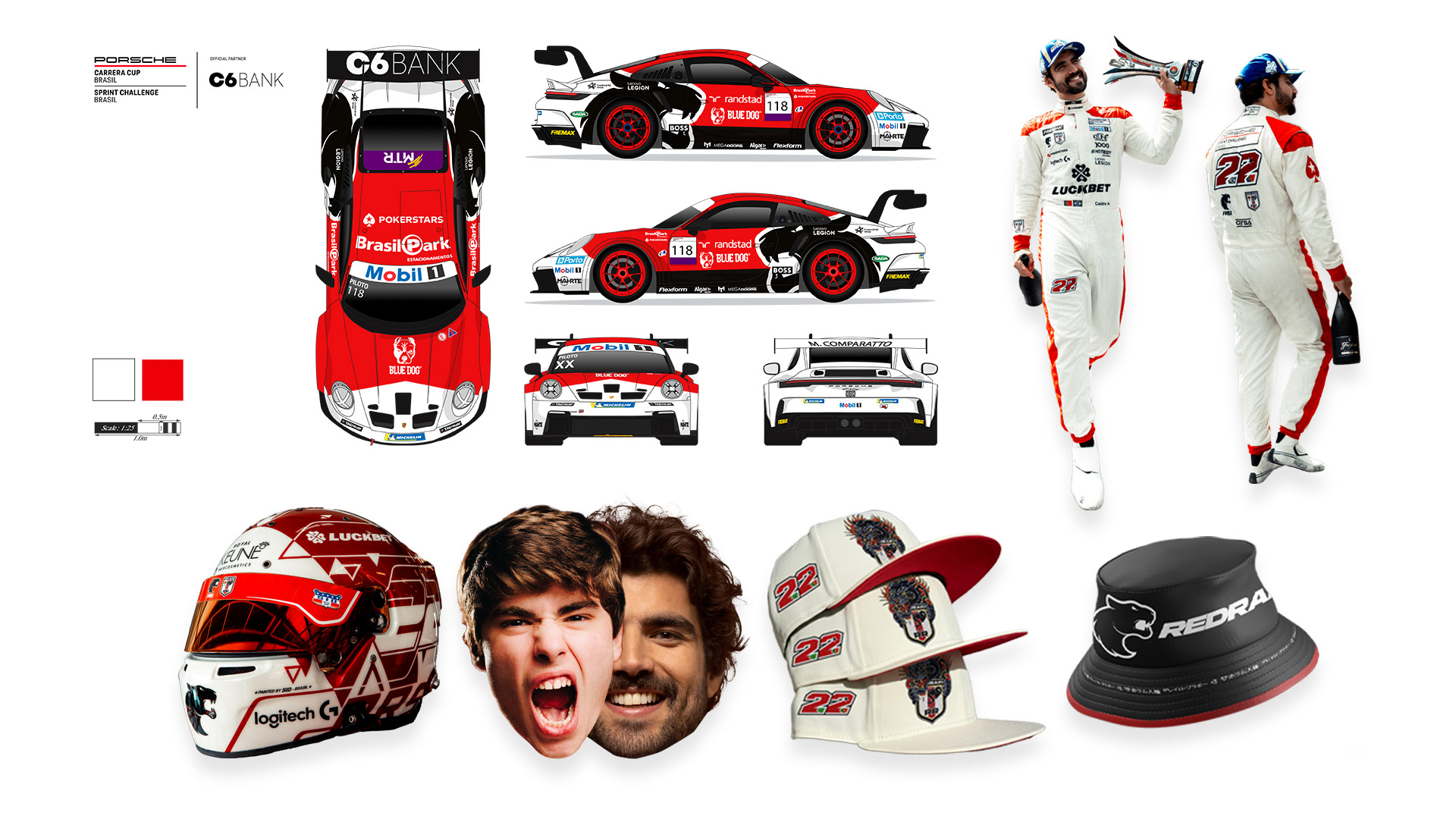
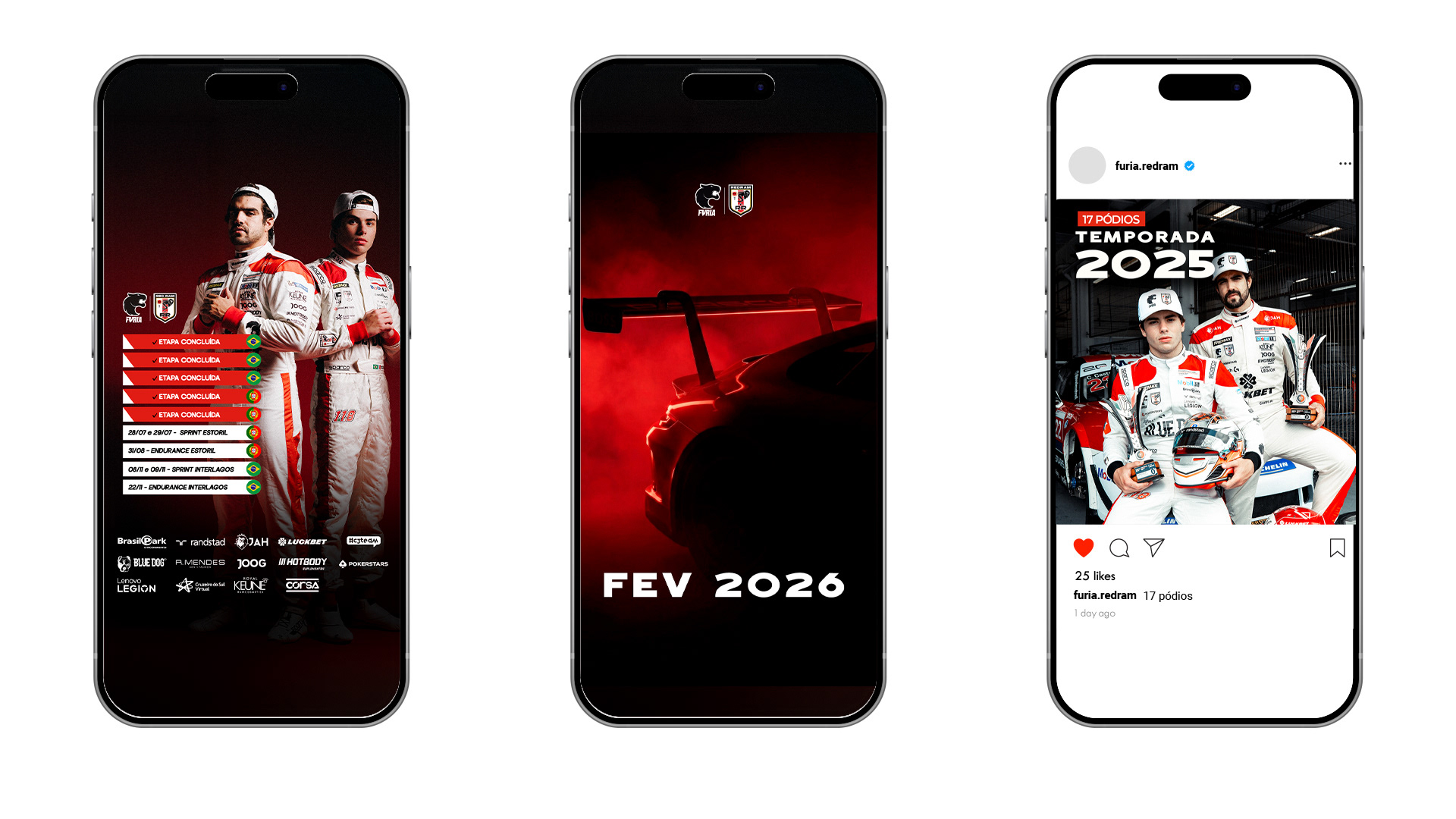
FURIA / Redram Porsche Cup produces broadcast and race weekend graphics across multiple formats: lower thirds, sponsor panels, on-screen cards, each with its own layout constraints. With a fixed sponsor roster across the season, the challenge wasn't frequent changes: it was ensuring every sponsor appeared correctly across every output, every time.
While working at C3 Company, the agency responsible for RedRam, I noticed sponsors were being omitted from certain formats entirely, a direct failure of visibility for partners whose contracts depend on it. I developed the system independently, on my own initiative, because I saw a structural problem that individual asset decisions would never solve. The result was a modular sponsor panel architecture that makes correct sponsor exposure the default, regardless of format or operator.
System Design:

The system is built around a single principle: sponsor visibility should be governed by rules, not by whoever is producing the asset that day.
The currently deployed configuration is a horizontal sponsor panel: tier-agnostic by design, reflecting the team's current sponsorship structure. It has been approved and will roll out across upcoming race broadcasts. Despite its simplicity, it operates on the same underlying logic as the full system: logo normalization, controlled spacing, and a rotation engine that ensures balanced exposure across the entire sponsor roster.
The vertical panel is the system realized at full scale. Designed as a future-ready extension, it introduces a three-tier sponsor hierarchy: Primary, Secondary, Rotational, built for when the property scales its commercial partnerships. It requires no redesign to activate; the architecture already supports it.
Together, the two configurations show the system's range: a clean, operational solution for today, and a governance framework ready for the property's next stage of growth.
Horizontal Panel — Broadcast Layer
​​​​​​​Designed for integration into high-frequency race graphics, the horizontal panel provides a tier-agnostic structure that enables rapid sponsor updates through component swapping.
Equalized slot distribution ensures consistent spacing, while internal normalization maintains visual balance across different logo formats.
Vertical Panel — Structured Layout
​​​​​​​
The vertical configuration introduces a tier-based hierarchy (A / B / C), enabling controlled sponsor prioritization within fixed layouts.
Multiple density variants (light, standard, heavy) allow adaptation across different content types while preserving hierarchy and consistency.
Sponsor Hierarchy Logic
​​​​​​​

Sponsor Hierarchy Logic

Sponsor visibility is structured across three roles:
Primary: fixed, highest visibility / Secondary: consistent supporting presence / Rotational: distributed exposure across variations
Logo Normalization System
Sponsor logos vary significantly in proportion and visual weight, creating imbalance when placed within fixed layouts. To address this, a normalization system was introduced to standardize logo behavior without requiring manual adjustments per asset. The system operates through three constraints:
Bounding Control: logos are contained within fixed safe areas, preventing overflow and layout breakage
Scale Compensation: slot-based size variations balance extremely wide or compact logos
Optical Centering: logos are aligned within containers to maintain perceived visual balance
This removes the need for manual logo resizing during production, ensuring consistent output across all assets regardless of sponsor mix.
Rotation System

A rotation model was introduced to distribute sponsor visibility across race-weekend outputs without altering layout structure. Primary placements remain fixed to reinforce premium positioning, while secondary and rotational sponsors cycle through predefined sets. This ensures balanced exposure across all partners without requiring manual layout adjustments or increasing production complexity. Each set represents a preconfigured sponsor arrangement, allowing content outputs to rotate exposure while maintaining a consistent visual framework. 
This approach aligns sponsor visibility with contractual exposure expectations while preserving layout consistency across all communication outputs.
System Behavior Across Outputs

The sponsor panel system integrates directly into existing broadcast graphics, functioning as a reusable layer across all content outputs. By standardizing layout behavior and sponsor placement, the system enables consistent execution across race-weekend communications while reducing the need for manual intervention.
Sponsor updates are handled through component-level changes, allowing rapid iteration without affecting layout integrity. This approach improves production efficiency, maintains visual consistency, and ensures reliable sponsor visibility across all formats.
The system scales across multiple drivers, sponsors, and content formats without increasing coordination overhead.
Outcome:

Before the system existed, sponsor panels were being built asset by asset, each one a manual decision about sizing, placement, and which sponsors to include. The result was inconsistency across formats and, in some cases, sponsors missing from outputs entirely.
The system changed that. With layout rules and rotation logic encoded into the architecture, production time per asset dropped significantly and revision rounds were reduced, there was simply less to get wrong. The client responded positively, and the system was approved for deployment across the upcoming race season.
But the more important outcome isn't operational: it's commercial. Sponsors now have guaranteed visibility across every format the property produces. That's not a design improvement. That's the system doing what sponsorship contracts require.
Back to Top